
Eau de Messi
Can you bottle the passion of a nation for $95 a pop?

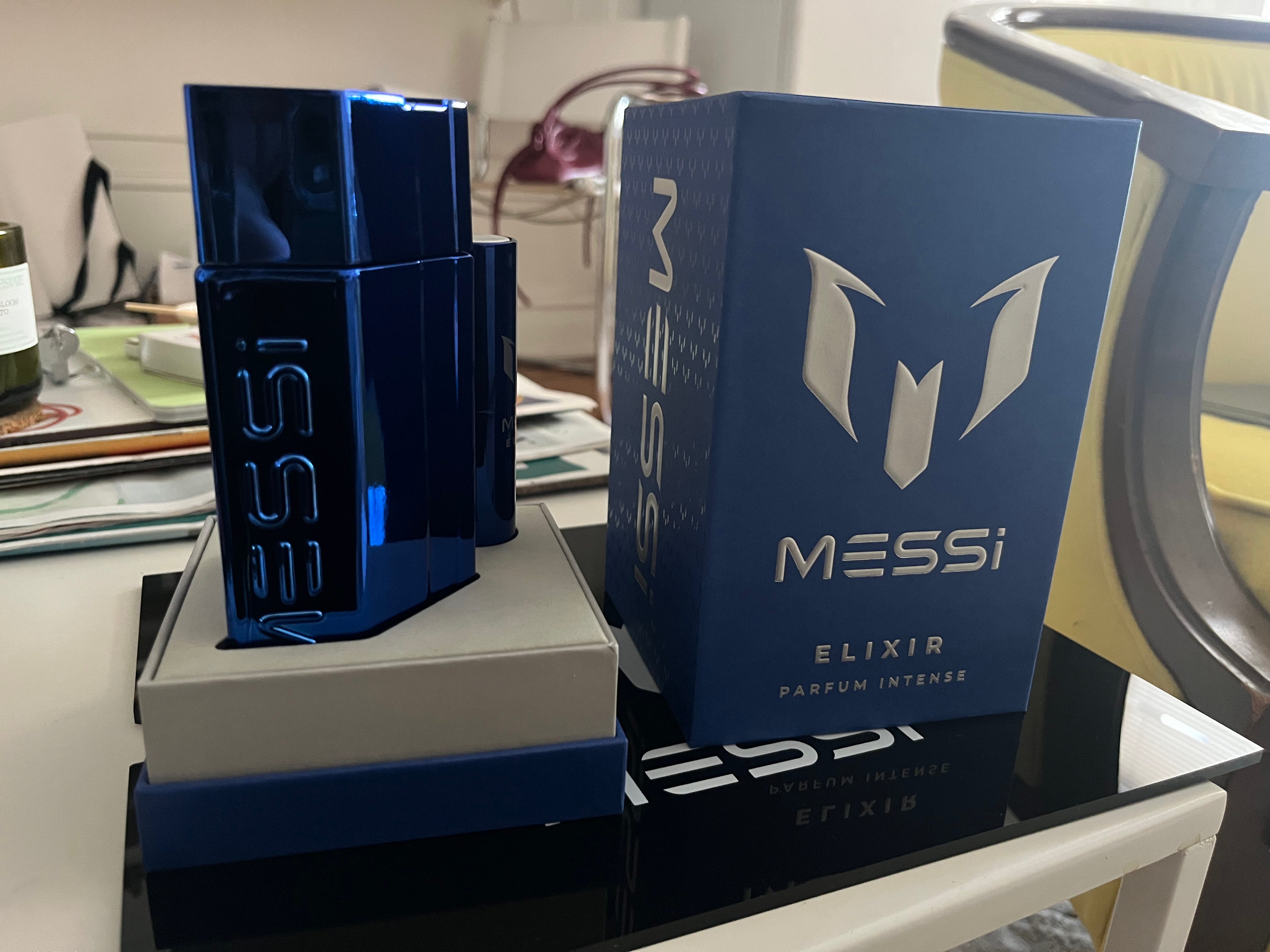
On Thursday, the 2026 World Cup kicked off with Mexico defeating South Africa 2-0 at the Estadio Azteca in Mexico City. That same day, I happened to receive a PR package containing the Messi Elixir Parfum Intense, an Ulta-exclusive launch from Lionel Messi’s namesake fragrance brand. Messi himself won’t appear at the North American edition of the World Cup until Tuesday, when Argentina plays its opening game against Algeria in Kansas.
On Thursday, I also began reading Eduardo Galeano’s El fútbol a sol y sombra. The first chapter contains the following lines:
“El juego se ha convertido en espectáculo, con pocos protagonistas y muchos espectadores, fútbol para mirar, y el espectáculo se ha convertido en uno de los negocios más lucrativos del mundo, que no se organiza para jugar sino para impedir que se juegue.”
“The game has been converted into spectacle, with few protagonists and many spectators, football to look at, and the spectacle has been converted into one of the most lucrative businesses in the world, which is organized not to encourage play but to inhibit play from taking place.”
Ever since it was announced that Messi was on the preliminary list for Argentina’s 2026 World Cup squad, I’ve wondered, why come back? Having won the title in 2022, what’s left for him? The earnest take would be that his country still needs him — Messi was the top goal scorer in Argentina’s 2026 World Cup qualifying campaign. The cynical take would be that, with the Messi name being used to sell everything from Louis Vuitton luggage to the country of Saudi Arabia, there’s too much money on the line for him not to play. Particularly now that Messi himself has a financial stake in American soccer, as ownership shares in Inter Miami were part of his compensation package for joining the MLS team.
This commercialism isn’t unique to soccer of course. The ongoing NBA playoffs are maybe a once-in-a-generation chance for New Yorkers to see the Knicks win the championship — and a once-in-a-lifetime chance for Jordyn Woods, fiancée to Knicks center-forward Karl-Anthony Towns, to promote her bag line. The 2024 movie Challengers was ostensibly about the competitive spirit of tennis, but, with all its product placement, it could also be read as a feature-length commercial for Augustinus Bader and Uniqlo. But maybe that’s an appropriate depiction of the actual sport’s relationship with advertising; at the recently concluded Roland Garros, Lacoste signs were only removed from the courts after multiple players were injured after running into the foot-high boards in the middle of play.
The most remarkable thing about any sport might be that seemingly no amount of greed or corruption can deter fans from pouring their hearts and souls into the game. Last year, I attended a talk for Katie Kitamura’s novel Audition, where Kitamura discussed the blurred lines between reality and artifice. Sports, she said, is maybe the most artificial setting you could imagine — a bunch of men throwing a ball around under totally made up constraints — but you can’t deny that the emotions produced on the field are anything but real.
Maybe no one has more emotions than an Argentine soccer fan. “Nothing else in my life affects me the way Argentina does,” albiceleste supporter Vanina Paolillo told The Athletic of her devotion to the national team. Cue the iconic “passion” scene from El secreto de sus ojos.
I can’t pretend to share their passion, even though I’ve seen it up close. I watched much of the 2014 World Cup from Buenos Aires, where I was living at the time. I remember going to a bar to watch the Argentina Netherlands semi-final with a friend and her family. When the game went to penalties, my friend’s aunt turned away from the TV and covered her eyes. “I can’t watch,” she said, trembling like Louis van Gaal himself had a gun to her head. She only turned around when the audience’s cheers let her know Argentina had won. The collective euphoria following that game made me believe Argentina was sure to defeat Germany in the final — but we all know how that went.
I imagine the goal of the Messi fragrance line is that some of that passion will trickle down into perfume sales. The Elixir, an instensified version of the original Messi scent launched in 2024, smells like most generic male scents on the market ranging from Dior Sauvage to Axe (Axe and its parent company Unilever being an official sponsor of the 2026 World Cup, you might see and smell plenty of Axe in the weeks to come). Neither the pseudo M-shaped perfume bottle nor the gold Stanley x Messi mate can claim the title for kitschiest Messi merch, however — that goes to the ten-foot inflatable Messi dummy from Lowe’s.
The original Messi fragrance was “designed to provoke a profound emotional connection,” as per the product description. Can a fragrance provoke the emotion seen in Messi’s sad puppy eyes as he collected the Golden Ball for best individual player at the 2014 World Cup, the glory of winning the trophy for his country still just out of reach? Or the devastation of missing out on not one, but two Copa América titles in a row? Or the pride of finally putting those demons to rest in Qatar three and half years ago?
Maybe, maybe not. But a $95 perfume might be easier to come by than entrance to Argentina vs. Algeria, where tickets are going for over $1,000 a seat.